By Joanne Culley
For Vicki Olds, the highlight of her year is the week she spends immersed in music at the Lake Field Music Camp.
“I like all kinds of music,” says Olds, who sings and plays bassoon. “Here, we can dabble in a variety of classes and try something new. I like that there are people of all stripes and flavours here, creating music at different skill levels. We’re all just trying to improve. At the beginning I say to myself – what can I conquer this week?”
Olds, who has been coming to the camp for over 10 years, says that her work as a math professor during the year is stressful, but that music camp is a different kind of stress – busy and intense, but fun.
Every summer, adult singers and instrumentalists of all ages and abilities gather to learn, play and perform with others during one week in August on the peaceful wooded grounds of Lakefield College School beside Lake Katchewanooka in the Kawarthas, about 150 km northeast of Toronto. Participants range from teens wishing to improve their skills to retirees who perhaps finally have more time to devote to music.
“Many people come who learned to play an instrument when they were young and they’re quite surprised to see that it all comes back – the fingering and technique is still there. It’s like riding a bike, you never forget it,” says Barbara Bolte, who teaches oboe. “It’s just a matter of dusting it off and bringing it back to life. I always say, at the very least, you’ll know more by the end of the week than you did at the beginning.”
Range of Courses
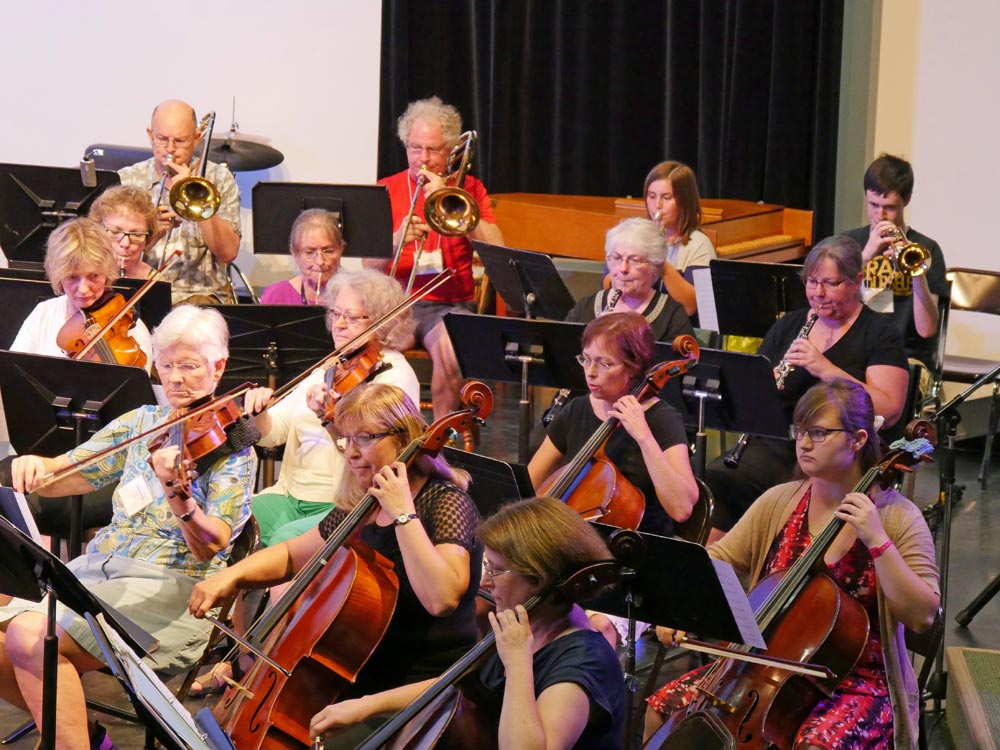
Lake Field Music Camp is going into its 39th year offering a full accommodations retreat for adult amateur musicians from across Canada and beyond. The campus offers excellent facilities, including a performance theatre and chapel with organ. The faculty are all professionals, working as conductors, soloists, teachers, studio musicians, and as members of bands and choirs, most returning year after year because of the intensity of the experience.
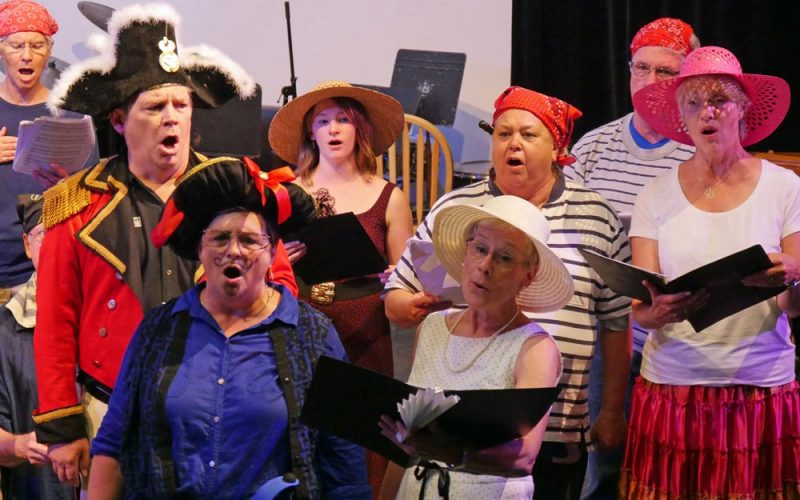
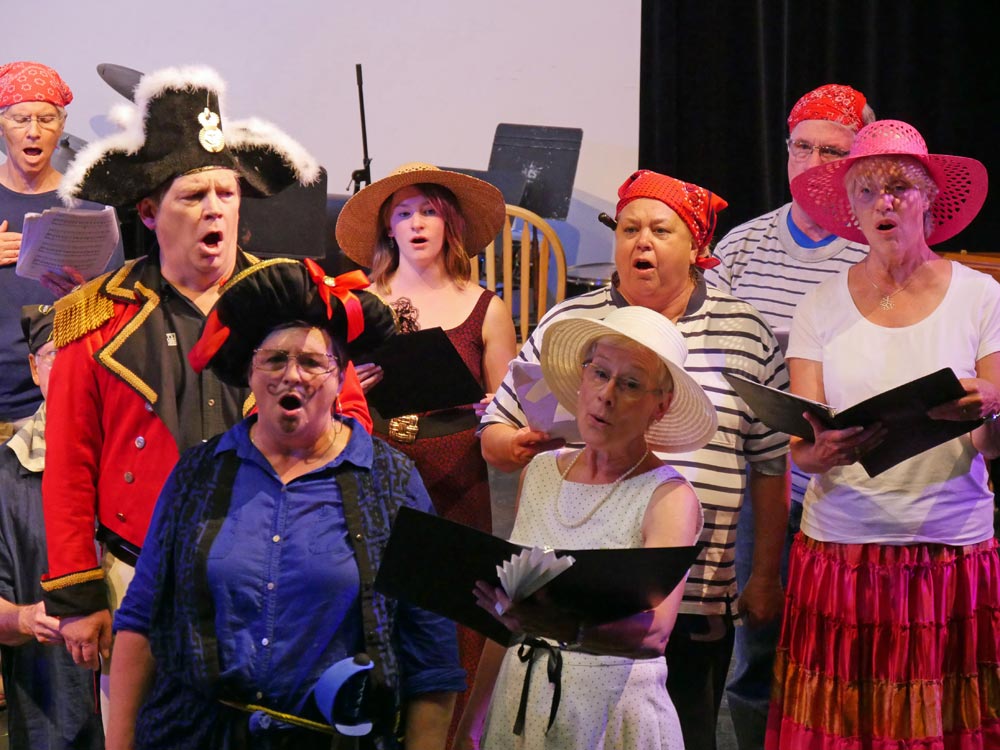
More than 50 different courses are offered in a variety of genres including classical, jazz and world music. No auditions are necessary in order to participate in the classes, which include vocal and instrumental technique, master classes, music theory, rhythm, chamber groups, jazz combos, bands, orchestra, choirs, musical theatre, and more.
The program is always evolving. Last summer, popular new classes included Celtic fiddling, melodic percussion, piano 4 hands and vocal duets. And there are opportunities for participants to try other art forms such as dancing during mid-day break or creating art while listening to live jazz.
Teachers share their ‘insider’ tips on how to improve your music making. In his jazz improvisation class, musician and composer Paul Neufeld demystifies this esoteric art form by teaching students the specific language musicians use in order to jam together. He also stresses the importance of learning from the greats by listening to their music. Jazz piano instructor Louis Simão breaks down the steps in approaching a jazz chart in order to work out a harmony.
In the classes, participants also learn from each other. The supportive, non-competitive environment encourages them to ask questions and take chances in their playing. Each class gives participants helpful tools for their independent practice or group playing when they return home.
There is no pressure to perform, but for those who want to, there are opportunities to strut their stuff during open mic, cabaret and other concerts throughout the week.
Everyone Can Make Music
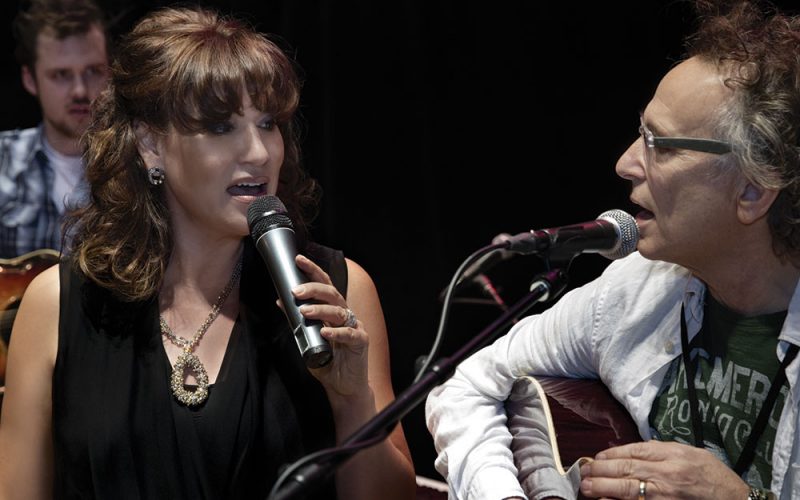
Charlotte Danard sings alto in a choir in Toronto, and came to Lake Field Music Camp to improve her voice.
“This is my second year at camp and I took several vocal training classes where I felt really stretched,” says Danard. “You can be carried along by the others in a choir, hiding behind the row in front, but here I learned new techniques and was critiqued in a positive, non-judgemental atmosphere. I feel the quality of my singing has gone up a notch. It’s so much fun – music has really enriched my life.”
“Just seeing the surprise on people’s faces when they accomplish something they didn’t think they could, and the confidence and self-satisfaction that results is amazing,” says Jessica Lloyd, who has been teaching at the camp for seven years. “As adults, we can be stuck in a rut, just doing what we’re good at to avoid taking risks. But here, even though they admit to being freaked out, the students face it, and their accomplishment is double because of what they’ve overcome.”
Barry Peters, who has been teaching vocal music at the camp for 25 years, keeps coming back because he loves seeing the participants connect to the “soul of music” and witnessing the magic that is created when they allow themselves to go to that “wonderful place of music making.”
“I love seeing an adult, who perhaps was told as a child to just mouth the words in the school choir, to finally let go of their fear and bravely start singing,” says Peters. “When they realize they can do it, it’s a phenomenal gift to both themselves and also to me – that’s what it’s all about.”
“Everyone on every level is supportive – it’s the friendliest audience you will ever find,” says Vicki Olds. “Being at Lake Field Music Camp and creating music is what energizes me for the rest of the year.”
Andrew Wolf, LFM Camp President, says enrolment has been increasing over the last couple of years and hopes it reflects a trend of people reconnecting with live music. The next camp takes place from August 7 to 14, 2016. To find out more, please call 647-692-3463, email info@lakefieldmusic.ca or visit www.lakefieldmusic.ca.