By Joel Wittnebel/Active Senior’s Digest
Breaking the rules, dismissing conventions, defying the odds – these don’t seem like something to play with when it comes to human life, but it’s these practices that have led to some of the most life-changing breakthroughs in the field of cardiology.
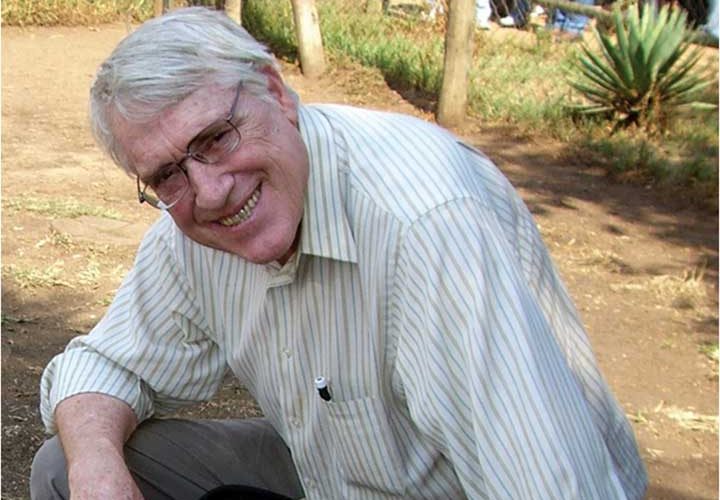
Dr. James Forrester, one of the most distinguished cardiologists in North America, has not only detailed these enhancements and breakthroughs in his new book, but he has also been at the centre of a few of them himself.
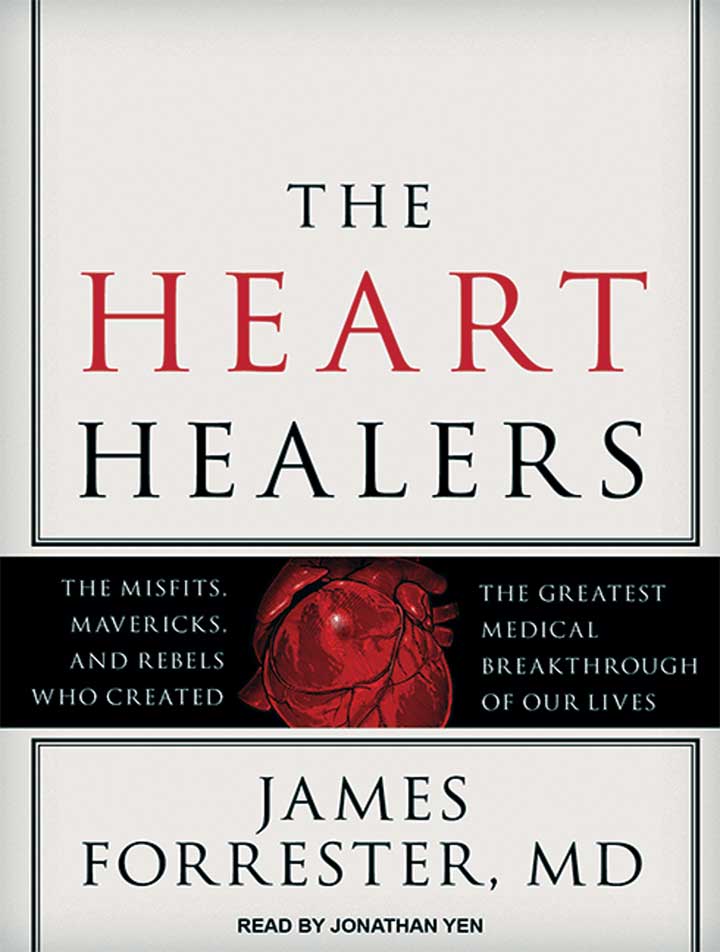
The Heart Healers is part personal memoir and part history of the developments in the field of cardiology and the developments of procedures to help the fight against heart disease.
Forrester, born in Pennsylvania, studied at the state’s Swathmore College before moving on to medical school at the University of Pennsylvania. From there, he moved to California before taking further studies at Harvard.
Returning to California upon graduation, Forrester spent most of his medical career at Cedar-Sinai Medical Centre in Los Angeles.
Since his graduation from medical school in 1963, cardiology has grown from the ground up.
“When I started out, we had no treatment for heart disease,” Forresters says.
And now, heart disease is no longer the number one killer in Canada, and soon the United States will pass the milestone as well.
“We, essentially, are on the cusp of conquering heart disease. It will no longer be our number one killer in this decade, ” he says.
And that is thanks to numerous breakthroughs in the field, three of which Forrester was a key character in.
The first happened during Forrester’s early years at Cedar-Sinai in the 1970s after he took over the Myocardial Infarction Research Unit.
One key problem at the time was researchers had no way of monitoring a patient’s heart function at the bedside.
Using a catheter, Forrester and his team were able to measure pressure in the lungs and how much blood was being put out from the heart.
In this way, researchers could monitor the impact of different treatments on the patient’s heart.
“Those two measurements allowed us to assess the effect of every cardiac drug that we were giving,” he says. “It completely revolutionized critical care because, for the first time, we had objective measurements of heart function and we could see immediately what our treatment did to heart function in people who had disordered heart function.”
 Today, Forrester says the area of medical innovation is a different field, and a double-edged sword. While there is more money available for researchers to carry out and search for innovations, there is much more oversight.
Historical practices, like the work of Drs. Dwight Harken and Charley Bailey, some of the first cardiac surgeons, who lost several patients before their first successful surgery, could never be done today.
“These guys, from time to time, they turned the Hippocratic oath upside down,” Forrester says.
Following the development of the Forrester Classification of Myocardial Infarctions in the 70s, Forrester’s next big step would come in the early 1980s when he and fellow researcher George Diamond would develop the Diamond-Forrester Method for interpreting diagnostic tests.
In a nutshell, their method allowed doctors to bring together the results of several tests for one outcome.
“What we worked out was a way of doing diagnostic testing in which the doctor could integrate all the information as to what the probability of having heart disease was,” he says.
And finally, in the 1990s, Forrester led the team that created the first fibre optic device that could look inside the coronary artery of a patient.
“To our amazement and surprise, what we discovered was, in people who have a condition called unstable angina…there was a blood clot and that had not been previously recognized,” he says.
This discovery led to the widespread use of blood thinning medications to treat patients with blood clots and prevent heart attacks.
With his achievements in the field, Forrester became the second person in history to be given the lifetime achievement award from the American College of Cardiology in 2009.
Forrester, now 78, stopped taking patients around 2010. However, he still consults doctors in many instances when dealing with patients and is also a professor at UCLA and the Cedar-Sinai Institute.
“I like to say that I go in and I pontificate and they act like I know what I’m talking about,” he says with a laugh.
Forrester’s book, The Heart Healers, was published in September.