
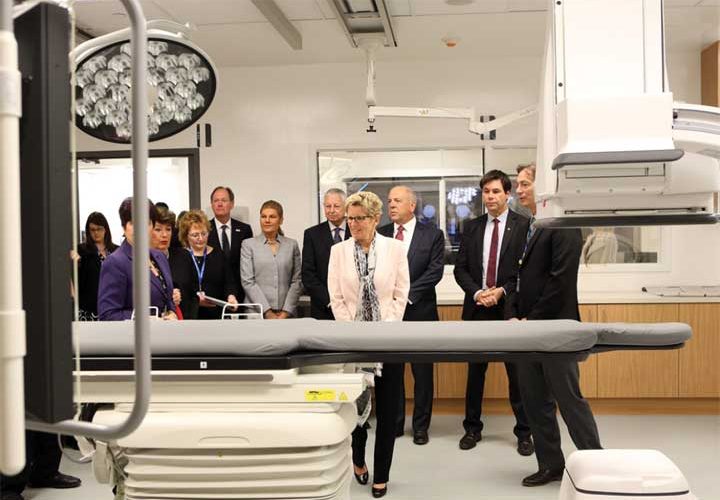
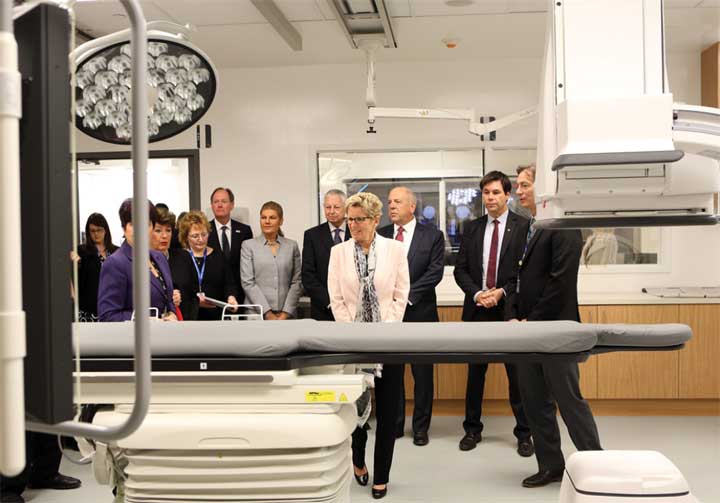
Humber River Hospital, North America’s first fully digital hospital, opened its doors in Toronto in October, showcasing the most modern technologies to offer patients more efficient, safe, accurate and reliable care.
The province is investing up to $2.13 billion in this project, according to a recent press release.
The new facility will automate routine processes to enhance patients’ experience and allow doctors and nurses to focus more on caring and healing. For example, robots will deliver non-narcotic drugs and other supplies; diagnostic images such as MRI scans will be charted immediately so specialists can review them sooner; and patients will check in on self-serve kiosks that will automate patient records and notify the relevant care teams that the patient has arrived.
Patients will also benefit from an increase in capacity of 656 beds from 549, expanded diagnostics equipment to enable more detailed and accurate diagnosis and treatment, and updated infectious disease control systems to monitor and prevent a broad range of infections.
“This is a significant and exciting milestone for health care in Ontario,” says Dr. Eric Hoskins, Ontario’s minister of health and long-term care. “North America’s first digital hospital will help put patients first by providing better access to high quality health care services in a modern, high-tech facility.”
Construction began on Humber River Hospital in September 2011. Upon completion this past October, the facility offers expanded ambulatory services, including cancer care, chronic disease management, dialysis, medical day care, medical/surgical/bariatric clinics, paediatric and women’s health, specialized geriatric and mental health and addictions services.
It will also offer new and enhanced programs and services, such as medical ambulatory clinics, paediatric, clinics, specialized geriatric outpatient services, mental health programs, women’s clinics, a geriatric rehabilitation inpatient program, cardiology clinic, and respiratory clinic.
The 1.8-million square foot facility, a bit larger than the 1.6-million square foot Toronto Eaton Centre, will serve more than 850,000 people in the northwestern Greater Toronto Area.
“Many hospital outpatients are seniors, and with a population of over two million older adults, it has been our goal to ensure Ontario’s seniors receive the best care, and the right care closer to home,” says Mario Sergio, Ontario’s minister responsible for seniors affairs.


